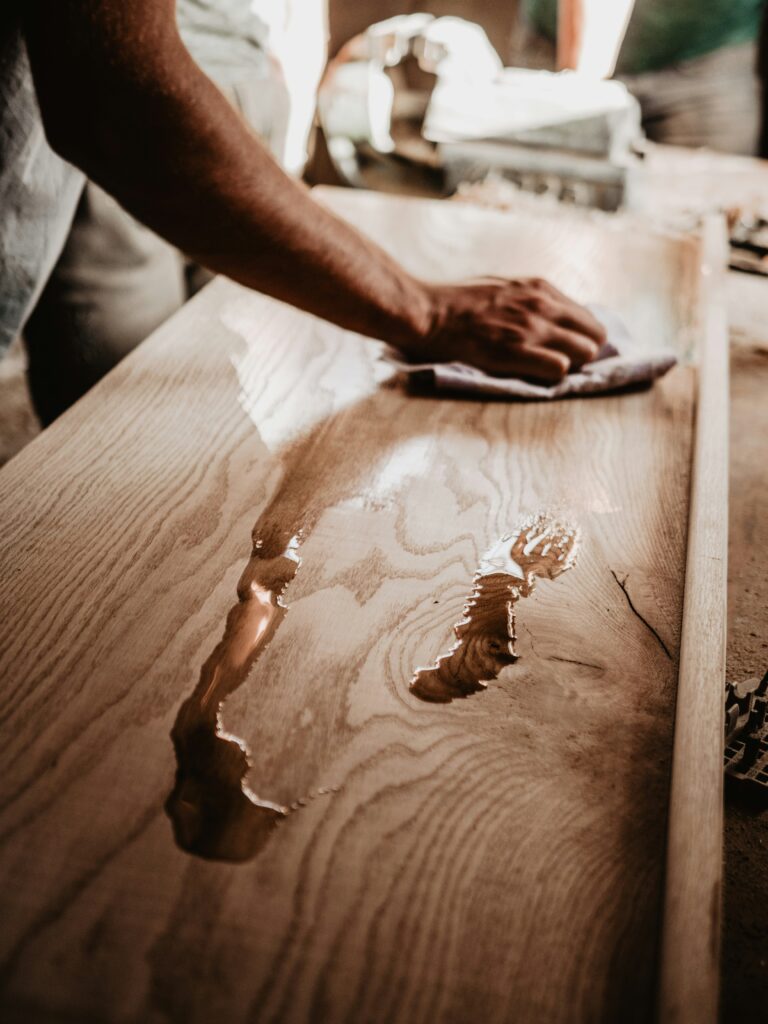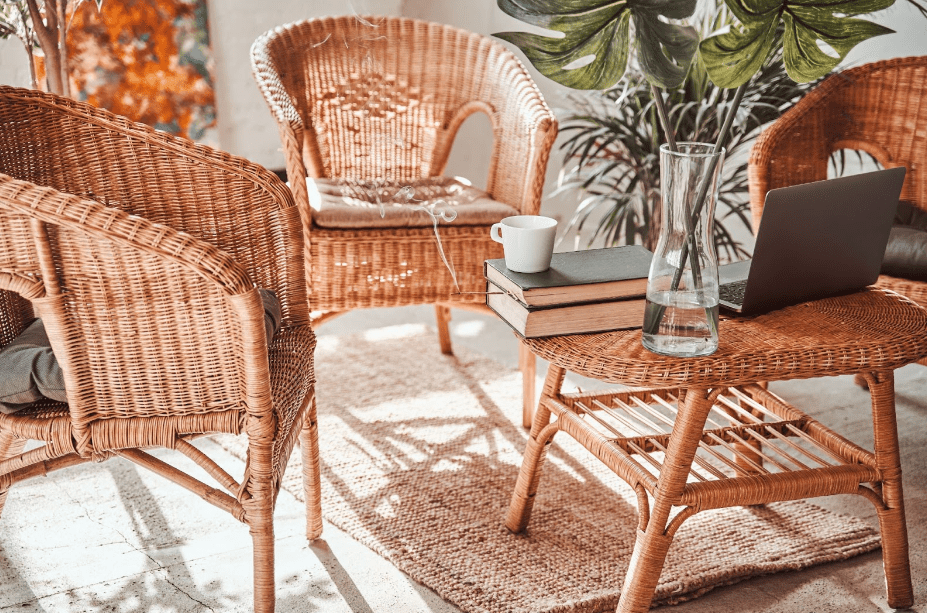


The way you treat your teak furniture in the first few months determines how it’ll look for decades. Do it right, and the surface stays even, the colour deepens naturally, and the wood ages well.
Do it wrong, and small mistakes start to show. Patchy tones. Dull areas. A finish that never quite looks right again.
This guide explains how to treat your indoor teak furniture properly, using clear and practical care that protects the quality you invested in.
You might also be interested in — How Durable is Teak Wood Furniture?
The Simple Routine That Keeps Teak Clean and Well Cared For
If there’s one habit that protects indoor teak furniture more than any product, it’s gentle, regular cleaning.
Start With Light Dusting
Wipe using a soft and dry cloth once a week. This stops fine particles from settling into the grain, where they become harder to remove over time.
Clean Deeper Only When Needed
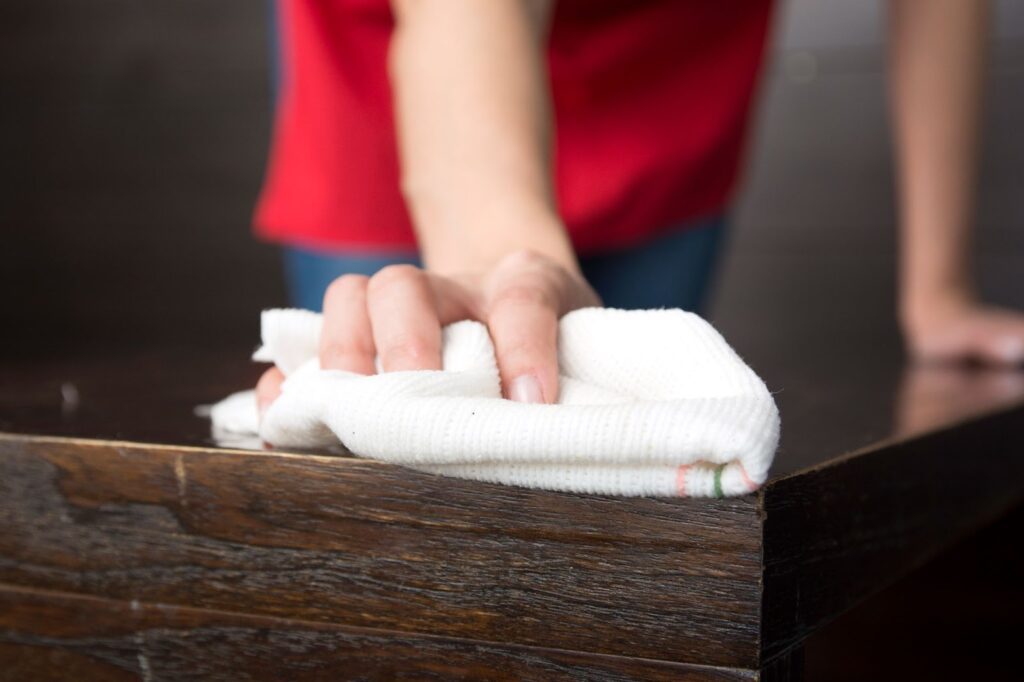
When the surface feels grimy, mix a small amount of mild soap with warm water. Then wipe along the wood grain using a soft cloth. Dry the surface completely once you’re done.
Clean Spills as Soon as They Happen
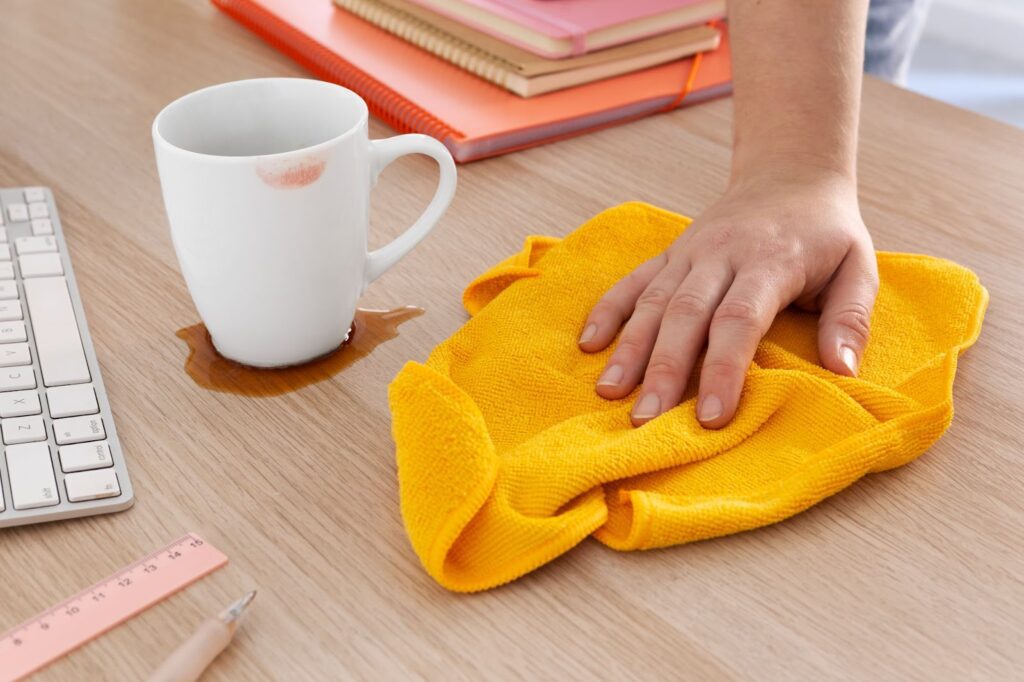
Liquids left sitting on the surface can leave marks, especially in humid indoor environments. A quick wipe prevents moisture from lingering in the grain.
Use Coasters and Placemats For Your Teak Table
Simple barriers protect the surface from moisture, heat, and repeated contact. This reduces the need for frequent cleaning or refinishing later on.
Avoid Excess Water
Teak handles moisture better than most woods, but soaking the surface can dull the finish. Less water is always better indoors.
This simple routine covers a large part of how to treat indoor teak furniture properly, without overcleaning or stripping away its natural oils.

Why Your Teak Furniture Changes Colour Indoors
New teak often starts with a warm, honey tone. Indoors, it slowly deepens. Exposure to light and oxygen causes a natural oxidation process.
Some owners worry when they see uneven tones forming. In most cases, this is simply how light hits different areas of the furniture. Rotating decorative items and table settings helps even out the colour over time.
Colour change is a sign of real wood ageing naturally. It’s not a cause for worry.
Should You Oil Indoor Teak Furniture or Leave It Alone?
This is one of the most searched questions about teak furniture maintenance. The honest answer depends on the look you prefer.
Teak doesn’t need oil to stay durable. Its natural oils already protect the wood. Applying teak oil indoors is a visual choice, not a structural one.
Oiling deepens the colour and adds a soft sheen. It also means committing to regular reapplication to keep the look consistent.
If you prefer a low-maintenance approach, leaving teak untreated indoors is perfectly acceptable. The surface will develop a matte finish and richer tone over time.
Whichever path you choose, consistency matters. Switching back and forth often leads to uneven patches.
Should You Oil Indoor Teak Furniture or Leave It Alone?
Most teak damage indoors comes from good intentions rather than neglect. Avoid these habits:
Using Harsh or Chemical Cleaners
Strong cleaning products strip away teak’s natural oils. This leaves the surface looking dry and uneven, even though the wood itself is still sound.
Relying on Silicone Sprays or Furniture Polish
Silicone-based products leave a thin residue on the surface. Over time, this attracts dust and makes the furniture harder to clean.
Placing Hot Items Directly on the Surface
Hot plates, mugs, or cookware can leave heat marks. These marks are difficult to remove and often require sanding to fix.
Leaving Rubber or Plastic Mats in Place For Too Long
Non-breathable materials trap moisture against the wood. In humid indoor environments, this can lead to stains or discolouration.
Small and consistent habits protect teak far better than frequent polishing or strong products.
Keep Your Indoor Teak Furniture Looking Great in Singapore’s Climate
Living in Singapore means dealing with humidity year-round. The good news is that teak handles this better than most hardwoods. Its tight grain helps reduce movement and warping.
Use Air-Conditioning or Dehumidifiers to Manage Indoor Moisture
These reduce extreme moisture fluctuations indoors. A steady indoor environment helps teak age more evenly over time.
Place Teak Away From Damp Walls and Constant Airflow
Keep teak furniture away from damp walls and direct airflow from vents, as excess moisture or uneven drying can gradually cause stains, discolouration, or warping.
Wipe Away Surface Moisture During Prolonged Rainy Periods
During extended wet weather, wipe away any condensation or moisture on the surface. This prevents water from sitting in the grain for too long.
When Your Teak Needs a Refresh and How To Do It Safely
Even well-cared-for teak can show minor scratches or a slightly dull surface over time. A refresh can restore its subtle glow and help maintain its longevity.
Identify the Areas That Need Attention
Look for small scratches, dull patches, or uneven sheen. These are signs that the wood could benefit from light sanding or oiling.
Avoid assuming the whole piece needs treatment. Targeting specific areas preserves the wood’s natural oils and character.
Light Sanding Along the Grain
Use fine-grade sandpaper (around 220–320 grit) and always sand in the direction of the grain. Start on a small, hidden spot to test how the wood responds.
Light sanding removes surface imperfections without altering the wood’s integrity. Avoid aggressive sanding, because too much can strip away natural oils and change the colour.
Remove Dust Thoroughly Before Finishing
After sanding, wipe away all dust using a soft, dry cloth or tack cloth.
Any leftover particles can create an uneven finish if you apply oil. Proper dust removal ensures the wood maintains its smooth, natural feel.
Apply Oil or Leave the Surface Natural
If you want to restore the rich colour and sheen, use a teak- or natural oil sparingly. Apply along the grain, let it soak in, and wipe off excess.
If you prefer a more natural, aged patina, leaving the surface bare is perfectly fine. Teak’s natural oils will continue to protect it.
Call In Professionals For Deeper Restoration
For scratches that go beyond the surface or areas that appear worn unevenly, professional refinishing is the safest choice.
Experts can restore the furniture without compromising strength, ensuring your teak remains a long-lasting investment.
Key Takeaway
Teak thrives when you keep things simple. Too many treatments, harsh products, or constant polishing often do more harm than good.
The best care is gentle and consistent. Dust regularly, protect surfaces from heat and spills, and choose whether you prefer an oiled or natural finish, then follow that routine.
Need more tips on caring for your indoor teak furniture? Send us a message on WhatsApp, and we’ll be happy to help.
Related Posts